How to Fix Alternate Page with Proper Canonical Tag error?
What is Alternate Page with Proper Canonical Tag?
If you’ve been spending time in your Google Search Console (GSC) "Indexing" report, you’ve likely stumbled upon a status that sounds like a tongue-twister: "Alternate page with proper canonical tag."
For most bloggers, this looks like a scary error that’s preventing their pages from ranking. But here’s the truth: Most of the time, this is actually a sign that Google is doing its job perfectly.
In this guide, I’ll break down exactly what this status means, why it happens, and the specific cases where you actually need to take action.
What Is a Canonical Tag, Really?
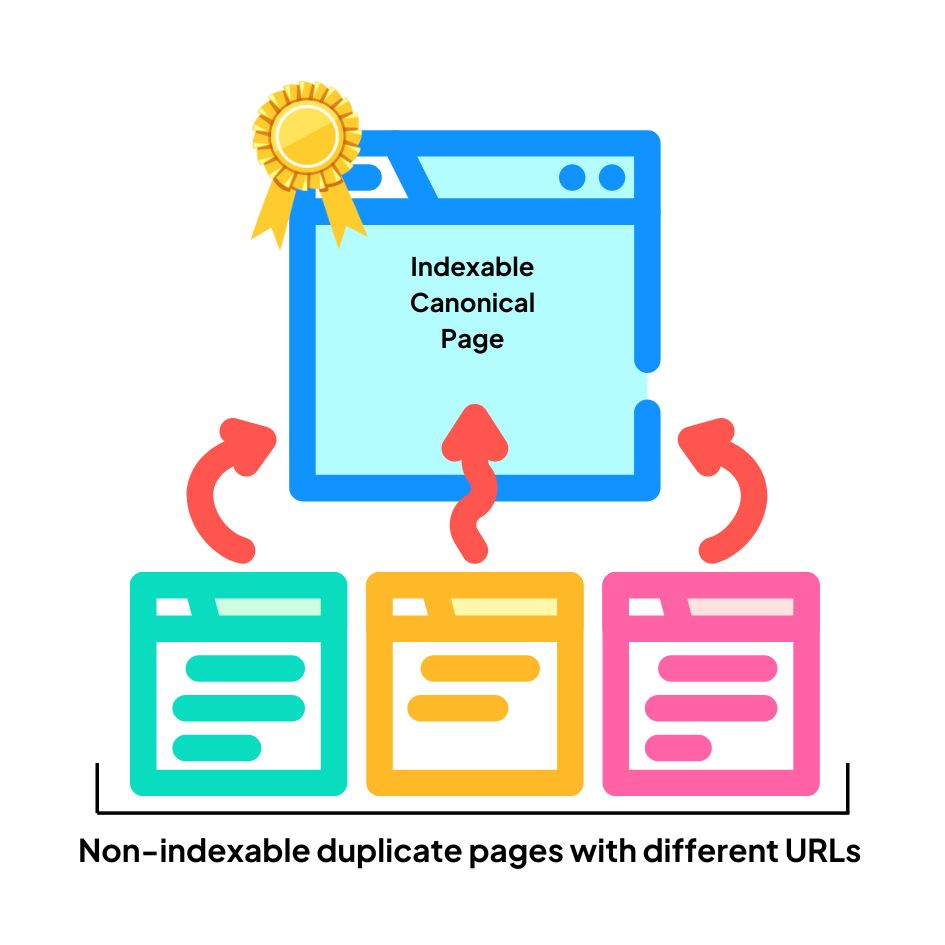
Before we fix it, you must understand the tool we are using. A Canonical Tag (rel="canonical") is a snippet of HTML code that tells search engines: "Hey, out of all these similar URLs, this one is the master version. Please index this one and ignore the rest."
When GSC says "Alternate page with proper canonical tag," it means:
Google found a page.
Google saw a canonical tag pointing somewhere else.
Google respected your tag and excluded the current URL from the index.
Example:
URL A:
mysite.com/seo-tips(Main)URL B:
mysite.com/seo-tips?m=1(Alternate)If URL B has a canonical tag pointing to URL A, Google will show this status for URL B.
What Does "Alternate Page with Proper Canonical Tag" Mean?
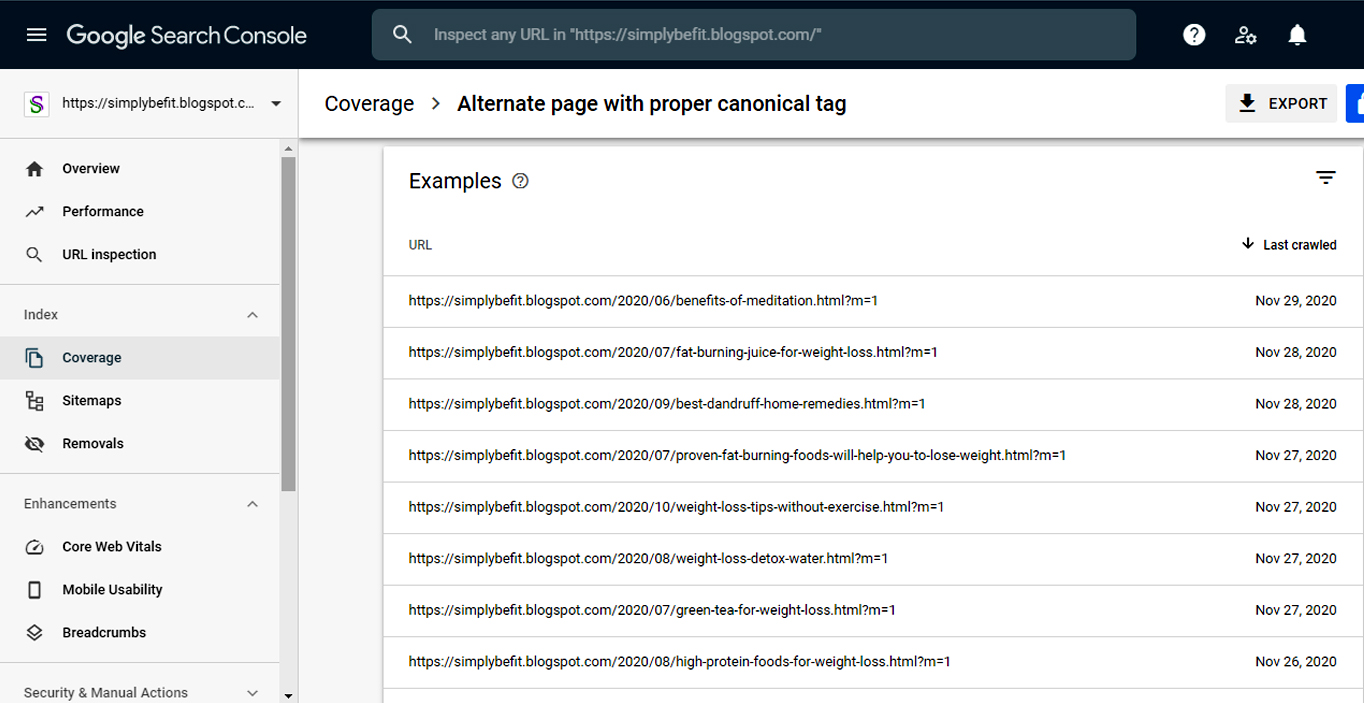
In simple terms, Google is telling you: "I found two versions of this page. You told me which one is the 'Master' version (the canonical), so I've indexed that one and skipped this 'Alternate' one."
Google doesn't want to show the exact same content twice in search results. When it sees an alternate version, it ignores it to keep the search results clean.
Is This Actually an "Error"?
Technically, No. It is an "Excluded" status. If the URLs listed there are things like tracking parameters (?fbclid=), mobile redirects (?m=1), or session IDs, then everything is working perfectly.
However, it becomes a problem when:
Your main, high-quality articles are being excluded.
Google is ignoring your "User-Declared" canonical and picking its own version.
Your SEO plugin is generating wrong tags.
Common Reasons Why This Status Appears
You’ll usually see this status for URLs that aren't meant to be the main version of a page. Here are the most common culprits:
1. Mobile vs. Desktop URLs
If your site uses a separate mobile version (like m.yoursite.com), the mobile links will show this status because the desktop version is the "Canonical."
2. Tracking Parameters (UTM Codes)
If you share a link on social media with a tag like ?utm_source=facebook, Google will crawl that URL. Since the content is the same as the main post, it marks the UTM link as an "Alternate page."
3. HTTP vs. HTTPS (or WWW vs. Non-WWW)
If your site is accessible via both http and https, Google will pick one as the winner and label the other as an "Alternate."
You will most likely to see this error alternate page with proper canonical tag in Blogger or blogspot websites. You can fix it easily.
Recommended: How to fix Blogger ads.txt error
How to Check if There is a Real Problem

While this status is usually fine, sometimes it can hide a real SEO issue. Here is how to audit it:
Open the Report: In GSC, click on "Pages" then find the "Alternate page with proper canonical tag" row.
Inspect the URL: Click on a specific URL and hit "Inspect URL."
Check the "User-Declared" vs. "Google-Selected" Canonical:
If they match? You’re good! No action needed.
If they don't match? Google thinks a different page is better. You might need to update your internal links.
How to Fix: Step-by-Step for Every Platform
If you’ve identified that important pages are being excluded, follow these platform-specific fixes.
1. How to Fix in WordPress
WordPress is famous for creating "ghost" URLs (attachment pages, category tags, etc.).
Check Your SEO Plugin: If you use Yoast SEO or Rank Math, go to the post editor. Under the "Advanced" tab, ensure the "Canonical URL" field is either empty (which defaults to the post URL) or points to the correct main URL.
Global Settings: Ensure your plugin isn't adding canonicals to your homepage that point elsewhere. In Rank Math, go to
Titles & Meta > Global Metaand check the "Canonical Tag" settings.Trailing Slashes: Sometimes
yoursite.com/pageandyoursite.com/page/are seen as different. Pick one in your WordPress Settings > Permalinks and stick to it.
2. How to Fix in Blogger (Blogspot)
Blogger is notorious for the ?m=1 (mobile) parameter, which is the #1 cause for this status.
The ?m=1 Issue: You cannot "fix" this because it's how Blogger works. However, you must ensure your theme has a dynamic canonical tag.
Manual Fix: Go to Theme > Edit HTML. Search for
<link rel='canonical'. Ensure it uses a tag like:<link expr:href='data:blog.canonicalUrl' rel='canonical'/>This tells Google that even on the?m=1page, the master URL is the clean one.Custom Redirects: Use the "Errors and redirections" setting in Blogger to point old deleted URLs to new ones, preventing Google from finding "Alternate" versions of dead pages.
3. How to Fix in Custom HTML / PHP Sites
If you are coding your site manually, you have the most control but also the most room for error.
Hardcoded Tags: Ensure you haven't copy-pasted a header file across multiple pages that contains a hardcoded canonical URL. Every page must have its own unique canonical tag.
Example Code:
<link rel="canonical" href="https://example.com/actual-page-url/" />Self-Referencing Canonicals: Every page should have a canonical tag pointing to itself unless it’s a duplicate. This tells Google clearly: "I am the master."
Advanced Audit: When Google Ignores You
Sometimes you set a canonical, but Google says: "Google-selected canonical is different from User-declared."
The Fix:
Check Internal Links: Are you linking to the "Alternate" version in your menu or footer? If you tell Google Page A is the master, but you link to Page B everywhere, Google will get confused.
Sitemap Check: Ensure only your Master (Canonical) URLs are in your sitemap. Delete any alternate versions from the XML file.
Redirects: If you have two pages that are 90% identical, don't just use a canonical tag. Use a 301 Redirect. A redirect is a much stronger signal than a canonical tag.
When Should You Be Worried?
You should only take action if a page you want to rank is being excluded.
For example, if your main blog post is showing up as an "Alternate" and Google is indexing a random category page instead, you have a Canonical Mismatch. This happens when your SEO plugin (like Yoast or RankMath) is misconfigured.
Human Tip: Always make sure your internal links point to the "Canonical" version of your URL. Don't link to the
?m=1version or thehttpversion if your site ishttps.
Frequently Asked Questions (FAQ)
1. Does this status hurt my SEO rankings?
No. In fact, it helps your SEO by preventing duplicate content issues. It ensures Google sends all the "ranking power" to your main URL.
2. How do I "Fix" this to make it go away?
You don't necessarily "fix" it. It's a status, not an error. As long as your main pages are indexed, having thousands of "Alternate" pages is perfectly normal for large sites.
3. Why is Google crawling these alternate pages anyway?
Google is thorough. It follows every link it finds (from sitemaps, social media, or backlink profiles). Once it reaches the page and sees the rel="canonical" tag, it knows what to do.
Final Thoughts for Webmasters
Don't let Google Search Console's technical jargon stress you out. Seeing "Alternate page with proper canonical tag" is usually a sign of a healthy, well-optimized website. It means you've successfully told Google which pages are important.
Focus on creating great content and let the canonical tags handle the technical organization behind the scenes!